


Your latest kids’ and teens’ CTV campaign delivered strong impressions, completion rates looked healthy, and on paper, it probably ticked all the right boxes. However, those numbers only tell part of the story.
The key question is: which shows did your ads actually run against, and how do they relate to your desired audience?
Not just the platform or app bundle, but the specific content your audience was watching. Most advertisers can’t answer that, making it difficult to understand the true impact of their investment.
This is one of the biggest challenges in youth CTV today.
The Transparency Gap
As kids and teens continue to shift from linear TV to streaming, brands have naturally followed suit. CTV has become an essential part of the media mix, but transparency hasn’t always kept pace.
Traditional audience targeting methods used in adult advertising aren’t an option in youth media. Strict privacy regulations mean behavioral targeting, user profiling, and cross-device measurement are heavily restricted, and rightly so.

The alternatives don’t always tell the full story either. A “household with children” could mean a toddler watching cartoons, a teenager streaming gaming content, or a parent watching family entertainment. Third-party audience data is also far more limited when it comes to reaching younger audiences.
As a result, many campaigns end up buying broad “kids content” and hoping they are reaching the right audience. But not all kids’ content delivers the same value.
Imagine you’re a beauty brand targeting families with kids aged 8–12. A campaign that delivers four million impressions and a 94% completion rate may look like a success on the surface. In reality, if the majority of impressions are served against categories like nursery rhymes, which the target audience realistically isn’t consuming, the campaign won’t deliver meaningful impact.
The issue isn’t whether you reached young audiences. It’s whether you reached them in the right environments.
Content Is the New Signal
In youth media, understanding the content children and teens choose to watch can reveal far more about their interests than broad audience assumptions ever could.
A dinosaur documentary, gaming stream, or creative series each attracts a very different viewer. The opportunity lies in measuring the value of content and understanding its impact once a campaign is complete.

Bringing Transparency to Youth CTV with SuperAwesome
This challenge is exactly what SuperAwesome’s content-level reporting is designed to solve. Advertisers can now understand where their kids’ and teens’ CTV campaigns ran, at a content level, while remaining fully privacy-safe and compliant.
Rather than receiving a list of apps or platforms, brands gain insight into the channels and shows where their ads appeared, alongside reporting across platform, creative, and campaign performance.
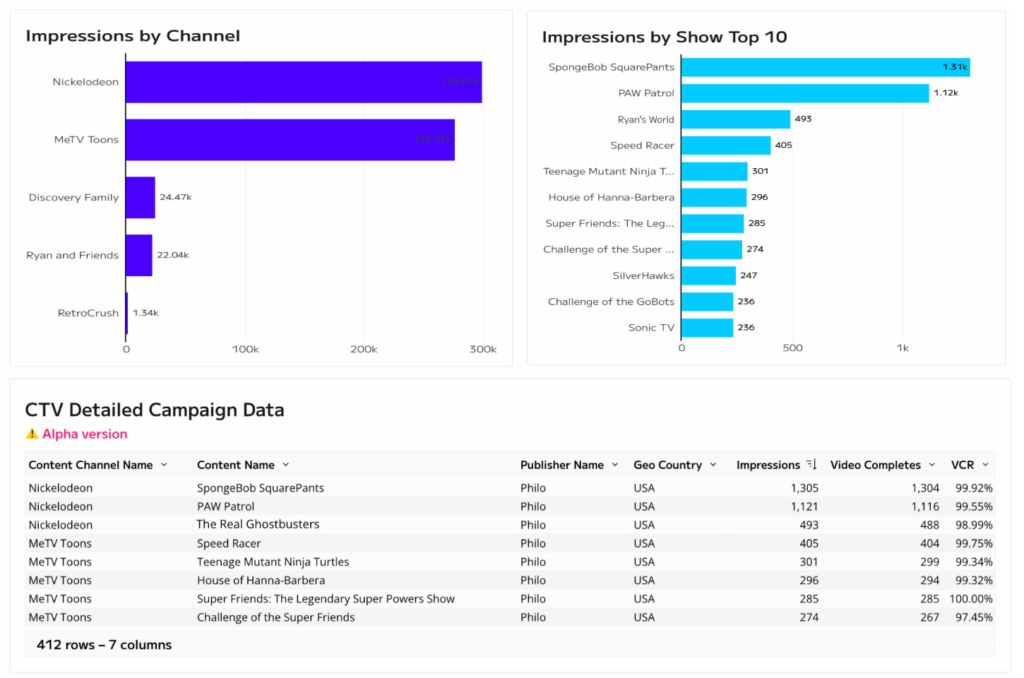
This makes it easier to understand which environments are driving results, identify opportunities for optimization, and make smarter decisions for future planning.
Importantly, this is achieved without relying on personal identifiers or tracking individual users. The reporting is powered by contextual intelligence, analyzing the content environment rather than the viewer.
Instead of simply knowing a campaign delivered, advertisers can understand where it delivered and which environments created the most value.
Better Visibility Leads to Better Decisions
For brands moving budget from linear TV into streaming, content-level reporting provides the confidence needed to support that shift.
Rather than relying on broad delivery metrics alone, marketers can see where campaigns appeared and how different content environments performed. This helps teams and stakeholders understand whether budgets are being invested in the right places.
For advertisers already investing in CTV, the value is rooted in optimization.
Every campaign creates learnings. High-performing shows and channels can shape future media plans, while lower-performing environments can be refined or removed. Decisions become based on real campaign insights, rather than assumptions.
The result is greater confidence in media quality, performance, and brand suitability.
Why SuperAwesome?
Transparency only works when it’s built on the right foundations. SuperAwesome works directly with premium youth publishers and streaming partners, giving advertisers a clearer understanding of where campaigns are running. The reporting has been built specifically for kids, teens, and families, rather than adapted from solutions designed for adult audiences.

Turning Campaign Reports Into Planning Tools
Traditionally, campaign reporting has focused on what was delivered.
Content-level reporting goes further by showing where delivery happened and what those insights mean for future campaigns.
Instead of ending with impressions and completion rates, advertisers gain a clearer understanding of which content environments performed best, where budgets delivered the most value, and how future campaigns can be improved.
This transforms reporting from a retrospective exercise into a genuine planning tool.
Questions Worth Asking Your CTV Partner
As streaming continues to grow, advertisers should expect more than reach and delivery metrics alone.
Ask your current CTV partner:
- Can you show exactly which shows our ads appeared against?
- Can you identify which content environments delivered the strongest results?
- Can you use contextual insights to improve future campaigns without relying on personal identifiers?
- Can you provide this level of transparency while remaining fully privacy-safe and compliant?
If those questions are difficult to answer, it’s worth asking why.
Youth CTV shouldn’t be a black box. With the right reporting, advertisers can move beyond basic delivery metrics and understand where their campaigns are making an impact.
Ready to see what your youth CTV campaigns are really delivering?