

Following the launch of our Culture Makers research, our Global Head of Youth Trends & Insight, Sam Clough, is taking a deeper look at some of the key findings and what they mean for brands. In the first of a four-part blog series, she explores how creators spark interest among Teens, and why it’s their communities that ultimately shape what catches on.
A creator can introduce a new game, spark interest in a fandom, or make a product impossible to ignore. But what makes that idea stick? And more importantly, what turns a piece of content into something teens actually care about?
We know creators play a huge role in shaping teen culture. After all, there’s a reason we call them influencers, but their influence doesn’t end when someone watches a video or follows a recommendation. What happens next is arguably even more interesting, as teens take those ideas, share them with friends, build on them, and make them part of their own conversations and communities.
As I explored in my first blog on our Culture Makers research, teens aren’t simply following youth culture, but actively shaping it. And while creators might provide the initial spark, it’s teen communities that decide whether an idea catches fire.
Creators Open the Door, but Trust Is Everything
Our latest Culture Makers research found that 71% of teens trust creator recommendations more than random advertising, compared with 65% of young adults.
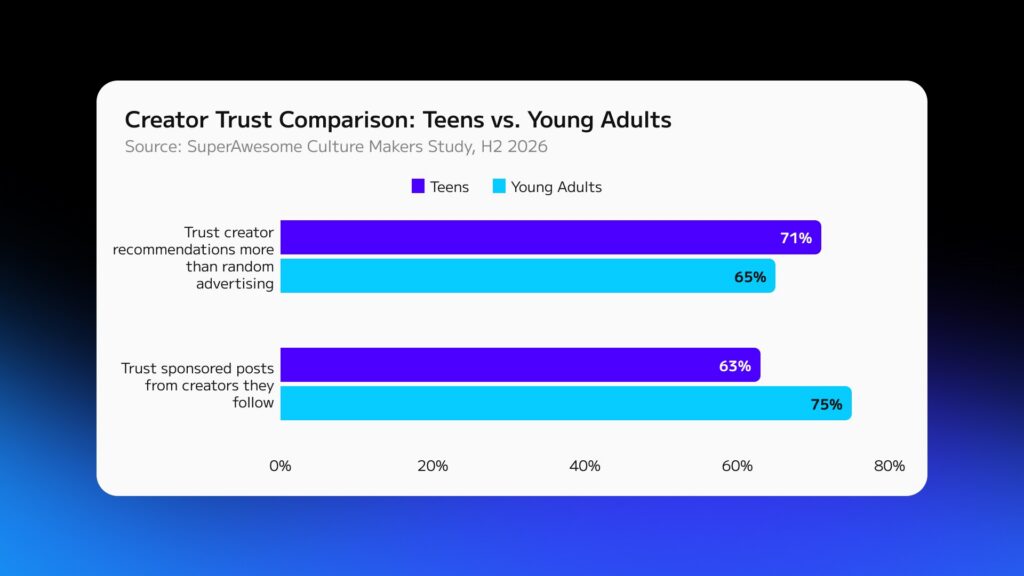
Even sponsored content can earn that trust, provided it comes from someone teens already follow and believe in. In fact, 62% of teens trust sponsored posts from creators they follow, compared with 56% of young adults.
For brands, that’s an important distinction, as teens aren’t necessarily opposed to advertising, but they do pay attention to who’s delivering the message and whether it feels like a natural fit.
Creators are particularly powerful because they can make unfamiliar things feel accessible. Whether they’re explaining the lore behind a game, sharing their take on a new release, or introducing an emerging trend, they give their audiences a reason to explore something further.
However, influence isn’t simply a numbers game. A creator with millions of followers isn’t automatically the right person to introduce a brand to a particular community. What matters is whether they have genuine authority in that space, built through their interests, knowledge, and relationship with their audience.
A poorly matched creator can make a partnership feel manufactured. Too much exposure across too many large creators can have the same effect, because it stops feeling like a recommendation and starts to feel like a takeover.

This is where micro and nano creators fit in; they may offer less reach individually, but their relationships can feel more personal and their authority more specific. An effective creator strategy balances reach and relevance by acknowledging the different roles creators play. A larger creator introduces the idea while a specialist creator explains it and a fan creator adds theory, jokes or edits that gives the community something to respond to.
And that’s where things start to get interesting.
When Fans Become Part of the Story
Think about how a fandom develops around a new game, film, or series.
The original content might spark an interest, but it’s often the theories, edits, fan art, memes, and conversations that keep people coming back.
As one 17-year-old in our research explained, he watches YouTubers who explore theories about books and games, alongside fan art and fan-made games that bring the community together.
These creators aren’t just talking about existing content. They’re giving fans new ways to experience it, interpret it and contribute their own ideas.
And teens are particularly enthusiastic participants.
Our research found that 40% of teens had participated in a trend, challenge, or fandom, compared with 34% of young adults. Teens were also more likely to have remixed, stitched, or used someone else’s format or audio.
Interestingly, they’re less likely than young adults to post videos or photos publicly.
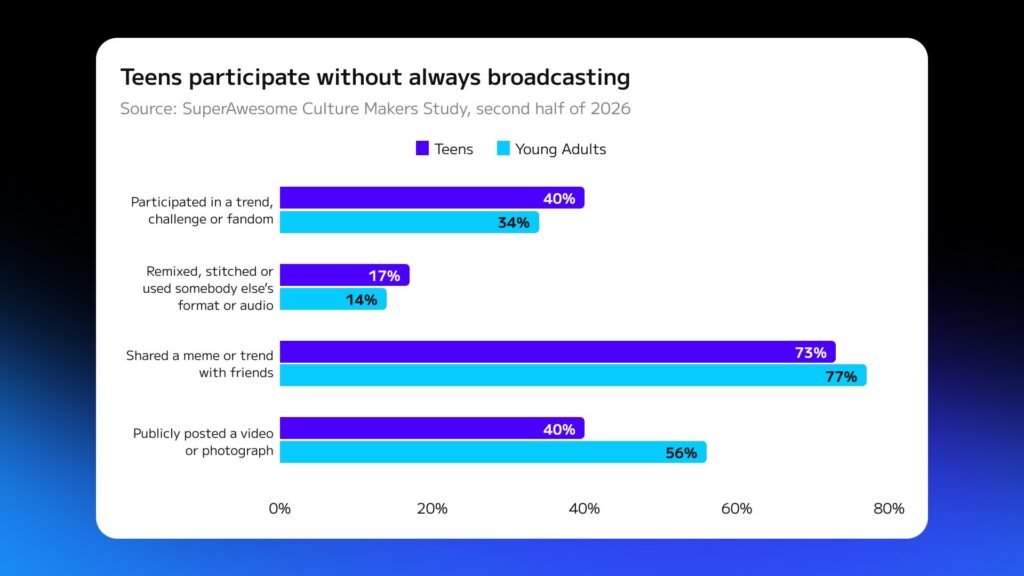
That tells us something important about teen participation. Being part of a community doesn’t always mean creating content for a public audience. It might mean making an edit for friends, contributing to a discussion, sharing a theory, or simply adding to an ongoing joke.
This changes the creative brief, rather than asking how to make content people will watch, we should also ask what people might do with it. Can they add their own interpretation? Does it give them something to discuss? Is there a recognizable format, character, or idea they can build on?
The strongest creator partnerships don’t necessarily have to deliver the whole story. Sometimes, they just need to give the community a reason to continue it.
The Real Influence Might Be Happening in the Group Chat
Of course, not every teen wants to create fan art or remix a video. Sometimes, participation is as simple as knowing exactly which friend needs to see something, and that personal exchange can carry more weight than another recommendation in the feed.
Our research found that one in five teens had privately shared a recent discovery with people they knew. More importantly, 66% of teens described private sharing as community-forming, compared with 46% of young adults.

This matters because receiving something from a friend changes its meaning. A video appearing in your feed might be entertaining, but the same video arriving from someone who knows you comes with an extra layer of relevance. It might mean “this is so you”, “we need to try this” or simply “you’ll find this hilarious”.
This is part of what we call the Teen Relay: teens discover something, explore what it means, pass it to the people who matter to them, and bring it into their everyday lives. It highlights the importance of sendability, not just shareability.
Content needs to make sense beyond the original creator’s post, resonating with someone encountering it for the first time in a group chat, without the context of the wider campaign. Does it give the recipient enough context to understand the joke, appreciate the reference, or want to get involved?
It’s worth remembering that some of the most meaningful engagement happens away from public view. Views and likes can tell us how content performs, but they don’t necessarily reveal the conversations and connections it creates.
So, What Should Brands Do Differently?
If creators introduce ideas but communities make them meaningful, creator strategy needs to go beyond choosing talent and approving content.
There are three things I’d encourage brands to consider:
- Choose creators for their credibility, not just their following. Think about the role they play within the community you’re trying to reach. The right combination of established voices, specialists and fan creators can offer different ways into the same conversation.
- Give audiences something to work with. Rather than scripting every detail, think about the assets, stories and formats that invite participation. A known sound, an interesting character or an unanswered question can give fans a starting point for their own contributions.
- Think beyond the original post. Consider how an idea might travel between creators, platforms and friendship groups, and what signs of participation you can look for beyond traditional engagement metrics.
None of this means brands should abandon reach or stop measuring performance. It means recognizing that reach is often just the beginning of a much more interesting journey.
Creators are essential to helping brands earn attention and introduce new ideas. But the real opportunity comes when those ideas become meaningful enough for teens to pick up, make their own, and share with the people around them.
The goal isn’t simply to appear in the feed. It’s to give teens something worth carrying forward.
Want to Dig Deeper?
Our latest research, Culture Makers: How Teens Define Fandoms, Trends & Spend, explores how teens discover, share and shape culture, and what that means for brands looking to build meaningful connections with young audiences.
Download the full report or get in touch with SuperAwesome to explore how these insights can inform your creator strategy.
Source: SuperAwesome Culture Makers Study, H2 2026. US quantitative research with 1,909 participants aged 13–24, combining consented behavioural data and survey responses, supported by 100 qualitative interviews.