
Last week, we released our latest piece of research at SuperAwesome titled ‘From Discovery to Devotion: The Evolution of Gen Alpha & Z Fandoms‘, which features input from almost 2,000 UK/US kids, teens, parents, and a host of well-known content creators. It was fascinating to uncover new insights into how fandoms ebb, flow, and evolve, but also to hit on new ideas and themes that spurred me to dig deeper to understand how fandoms actually work today.
When I tell people that 89% of Gen Alpha and Gen Z are connected to a fandom, I usually get one of two reactions: either “that sounds about right” or “wait, really?” What surprises people even more is that 56% of these young fans engage with their fandoms daily, and 80% have spent significant money on them in the past three months.
But here’s what should reshape how we all think about reaching young audiences: the fandoms that win are the ones that get people talking, and if your brand strategy doesn’t account for continuous conversation, then you’re building on shaky ground.
Whether you’re a brand building your own fandom around an IP you own or you’re looking to strategically align with existing fandoms to reach passionate audiences, the fundamental principle is the same: talkability is what makes or breaks your success. The difference is simply in how you apply it.
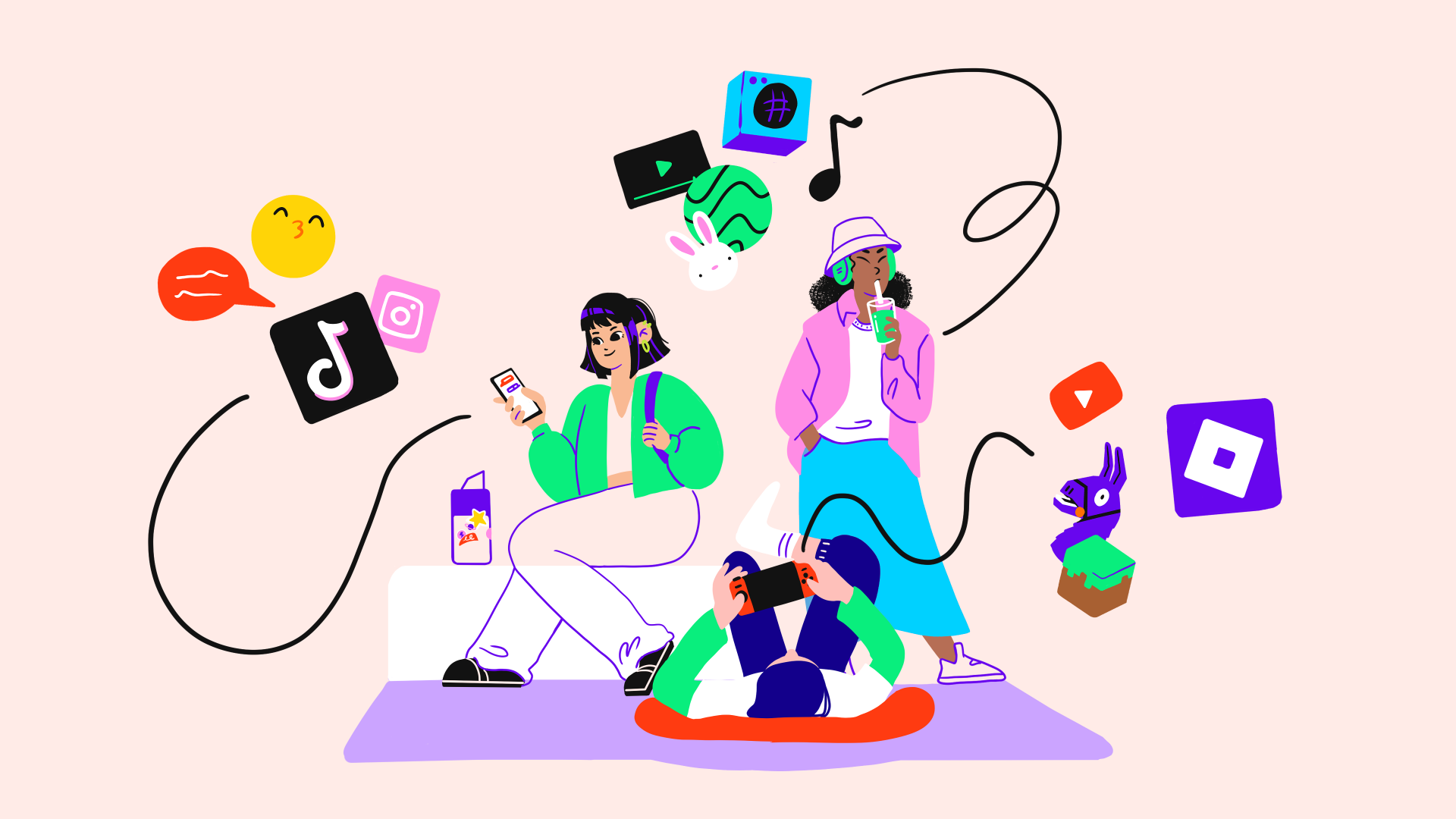
What’s more, how and where those conversations happen is vastly different in today’s fragmented media landscape. Talkability doesn’t just mean word of mouth, it means sharing memes, joining forums, contributing to comment flows and talking in-game as well as having IRL conversations with friends and family.
Talkability: The New Currency
Talkability is sometimes misinterpreted as virality, but under a new name. However, talkability isn’t a single sharp peak; it’s a continuous conversation that unfolds across posts, memes, lore, creator content, and fan contributions, all of which are debated, remixed, and shared. It’s what sustains fandoms and keeps them culturally relevant between official content drops.
When was the last time you saw a young person excitedly discuss a brand that wasn’t giving them something to talk about? That wasn’t sparking theories, enabling creation, or providing material for their group chat?
The brands that understand this don’t just create content – they create conversation starters. They build rich lore and backstories that fans can contribute to, and they celebrate when fans add their own interpretations to them, too.
So, What Powers Talkability?
Our research revealed three key drivers of fandom conversations:
1. Lore That Invites Exploration
Deep, detailed universes give fans something to discuss, dissect, and debate. Whether it’s LEGO Star Wars Fortnite, or the intricate backstories in anime fandoms, lore creates the foundations for ongoing engagement. Fans want to do this work: 14% actively create fan art, and many more engage with their favourite fandoms through comments, theories, and discussions.
2. Creators That Act as Co-Authors
42% of US under-18s and 48% of UK under-18s say creators help them stay engaged with their fandoms. Creators aren’t distribution channels for fandom, they’re co-authors of fandom culture.
Through reactions, explainers, memes, live streams, and commentary, creators surface hidden lore, extend jokes, and maintain emotional investment into fandoms between major content moments. In many cases they also give brands a credible, brand-safe way to enter fandoms that are already in motion.
3. Platform Ecosystems That Enable Participation
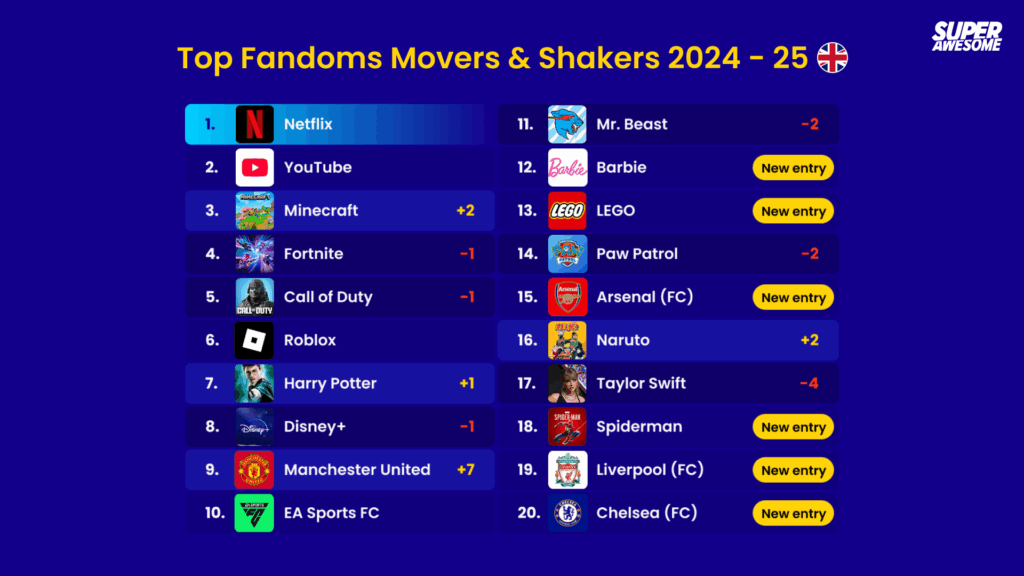
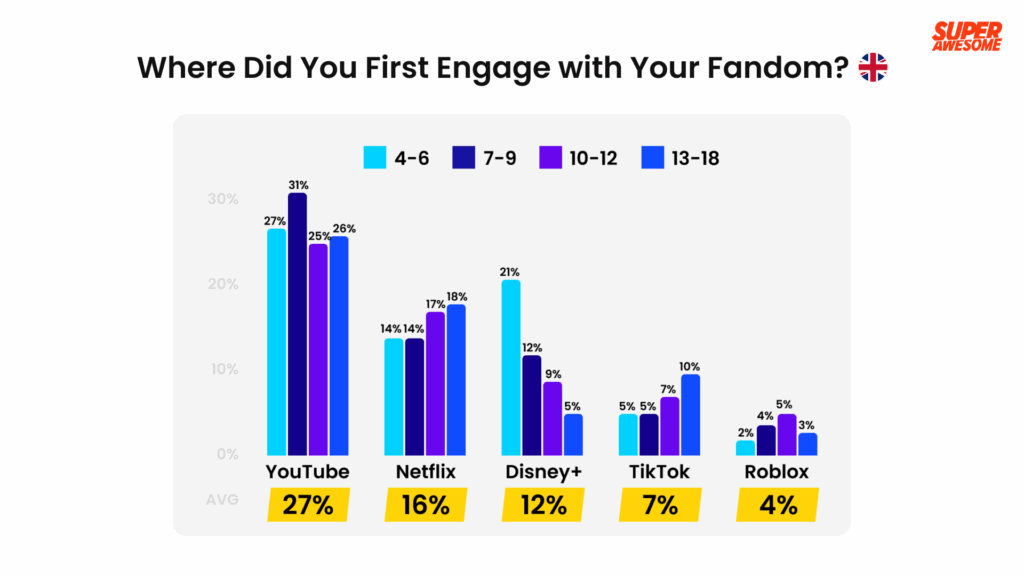
Fandoms in 2026 also don’t live on a single platform. They flow across them, with each touchpoint adding something unique. YouTube dominates as the primary discovery platform (cited by over one-third of kids and teens), but Roblox, Netflix, Disney+, and TikTok all play distinct roles too.
The Lifecycle Advantage: Knowing When to Show Up
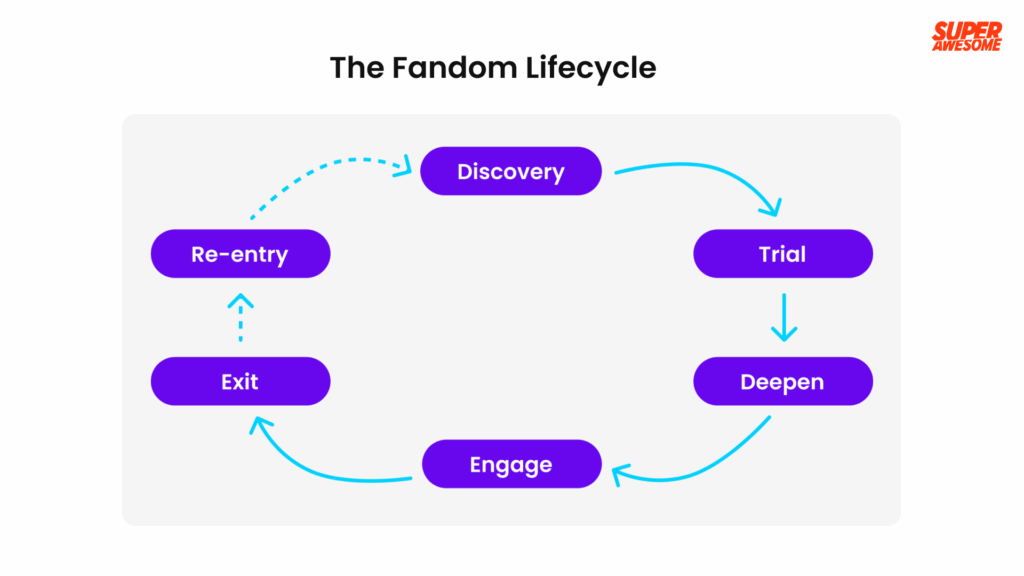
For both IP owners and brands looking to tap into fandoms: understanding where a fandom sits within its lifecycle changes everything about how you show up. If you own the IP, you’re thinking about how to move fans through these phases and keep them engaged. If you’re a brand looking to align with an existing fandom, you’re identifying which phase offers the strongest opportunity for your specific objectives.
Our research identified six distinct phases, but let me focus on where the commercial opportunity is strongest:
Discovery & Trial: YouTube as the Gateway
YouTube reigns supreme as both a discovery and trial environment. Over half of first exposures to fandoms come from another fan, and this social dimension drives discovery. Creators make their recommendations feel personal, which is why their influence matters so much at this initial stage of the fandom lifecycle.
Deepen & Engage: Where Emotional Benefits Peak
This is when brands have an opportunity to join fandoms—whether you’re releasing new content for your own IP or aligning a complementary brand with an existing fandom at its cultural peak. Fans are watching content, talking with friends and family, buying merch, and creating their own content.
The engage phase is particularly committed. Fans spend money on merch and toys, immerse themselves in the lore on official accounts, and follow creators and share copious memes with fellow fans and friends. Badging and collecting are also key to demonstrating commitment and sharing an outward expression of belonging.
Whether you’re nurturing your own fandom or aligning with a major entertainment release, a gaming community, or a creator-led beauty or fashion fandom, lifecycle signals like these help you identify when and where to show up.

What This Means for Your Strategy
Whether you’re building your own fandom or tapping into existing ones, these are some of the things you should build into your strategy:
Design for contribution, not just consumption
The most successful fandoms celebrate when fans add their own interpretations. Are you creating space for fan-owned curation and creation? 63% of fan content consumed is short-form, which means your YouTube Shorts strategy matters.
Map the platform ecosystem
YouTube will reach everyone, but Roblox is key for kids and tweens. Discord, Pinterest, and Reddit are all fandom-rich spaces for teens that require specialised audience intelligence.
Creators are your entry point
They’re not just influencers. They’re how you enter existing fan conversations.
After engaging with creator content, fans consume more content, talk with friends, deepen their engagement with creators, and often even purchase merchandise. That’s the acceleration you want to tap into.
Memes matter (but tread carefully)
They’re pivotal in generating talkability across the entire lifecycle. Memes amplify community and belonging, creating that “if you know, you know” factor that makes fans feel like insiders.
As one creator told us: “The more stupid something is, the more shareable it is.”
Where We Go From Here

Fandoms have evolved from passive consumption to active participation. They’re conversations in group chats, creator commentary, meme sharing, and community building across platforms.
For brands, this creates both challenge and opportunity. You can’t just build awareness and walk away. But by understanding fandom dynamics and lifecycle signals, you can align with passionate, engaged audiences during moments of peak cultural relevance.
In 2026, if you’re not talkable, you’re invisible. And the brands that understand how to earn talkability are the ones that will win.